
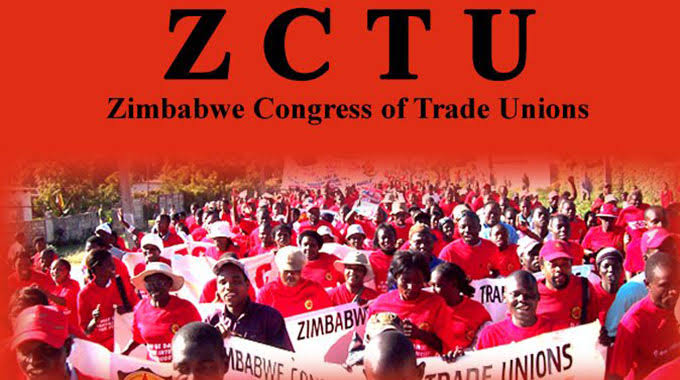
The Organisin1. It is composed of the National Organiser.
2. The department links with regional offices of the Congress.
3. The department also works with affiliate trade union organisers but however there is no direct link between the Z.C.T.U Organising Department and Affiliate National Organisers.
AIM
To promote awareness of labour and civic issues and to mobilize support for ZCTU positions on related issues.
OBJECTIVES
1. To build viable, strong and bigger industrial unions all united under one national centre.
2. To achieve 100% unionization in all sectors that employ labour.
3. To unite unions through mergers, amalgamations and federations.
4. To co-ordinate and enhance trade union activities in Zimbabwe, towards greater “organic and mechanical” solidarity for the working class.
5. To promote “constitutional discipline” among affiliates and general membership.
6. To consult with union leadership, affiliate officials and secretariat departments and establish labour and civic issues that bear on the welfare of the worker.
7. To address worker population on political, social and economic issues.
8. To consult with union leadership, affiliate officials, secretariat, ZCTU structures and departments to establish requirements for national events.
9. To advise leadership on worker issues that require action.
10. To translate leadership and congress resolutions into action (plans).
11. To prepare project proposals and budgets for departmental organising activities.
12. To fight division amongst the labour movement especially arising from:
Personality differences
Petty jealousies
Individual power struggles
Petty ideological political differences
ORGANISATIONAL STRENGTHS (ORGANISING PERSPECTIVE)
1. Democratically elected leadership
2. Established, registered national unions
3. Recognised and reputable national centre (ZCTU) internal and external
4. Established functional structures
5. Organised and united membership
PROBLEMS (CHALLENGES)
1. Decline in the trade union membership.
2. Poor membership service and lack of visibility at shop floor by union leadership.
3. Lack of effective information dissemination systems
4. Lack of inter-union solidarity within unions
5. Resolutions made on strategies, policies and action to be taken by unions not implemented and at times seldomly communicated to Membership
6. Manipulation by government, employers and political parties
7. Repressive legislation
8. Politicisation of the workplace
9. Proliferation of small unions some of which are craft unions in nature and that are reluctant to amalgamate.
APPROACHES AND STRATEGIES
In order to reach out to the worker population, the department uses the following approaches and strategies
6 National organisers working group
7 Company based meetings
8 Labour foras
9 General meetings
10 Workers (trade union) committee meetings
EXPECTED OUTCOMES
The department seeks to achieve the following outcomes:
1. An increase in membership participation in ZCTU activities by 50% through intensified mobilization.
2. Improved trade union and worker rights awareness.
3. Stronger and viable unions through membership recruitment,
4. 100 trained union organisers.
5. Functional and effective ZCTU structures.
6. Merged unions
7. Increased union membership by 35% through union specific targeted recruitment.
To build a strong, united, and effective trade union movement through strategic organising and collective bargaining.
To organise workers and strengthen collective bargaining power for better wages and working conditions.
Contact information not available